Français | 🇬🇧 English
VIEW OUR 2026 BIENNALE EXHIBITION CATALOGUE
Dominique ZINKPE draws inspiration from ancestral customs
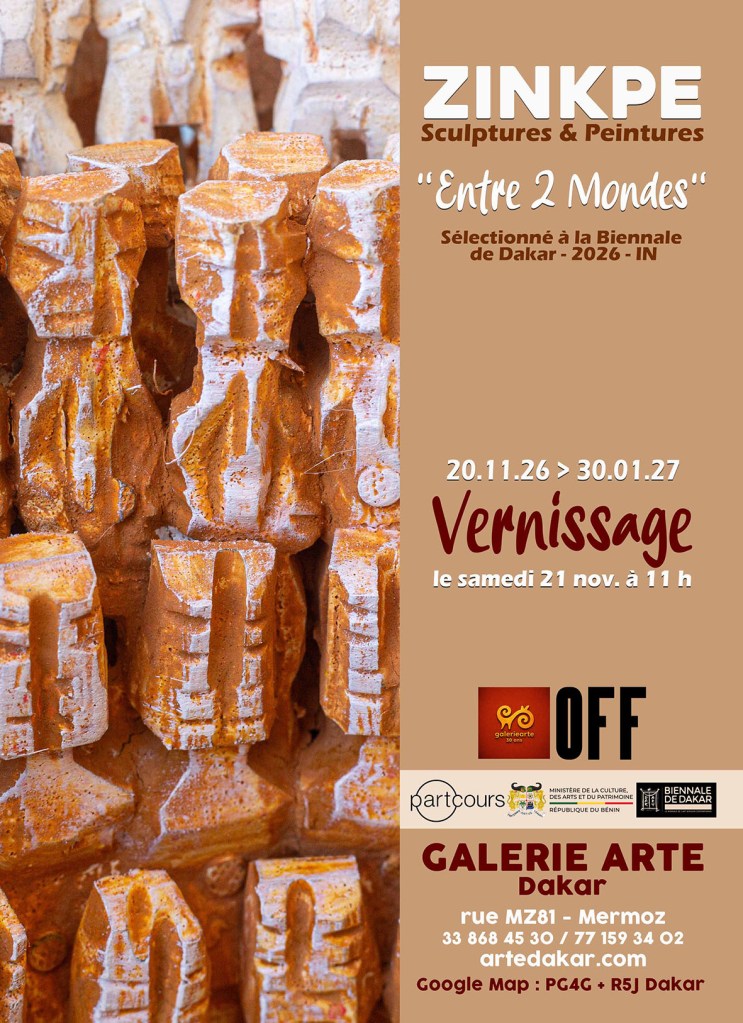
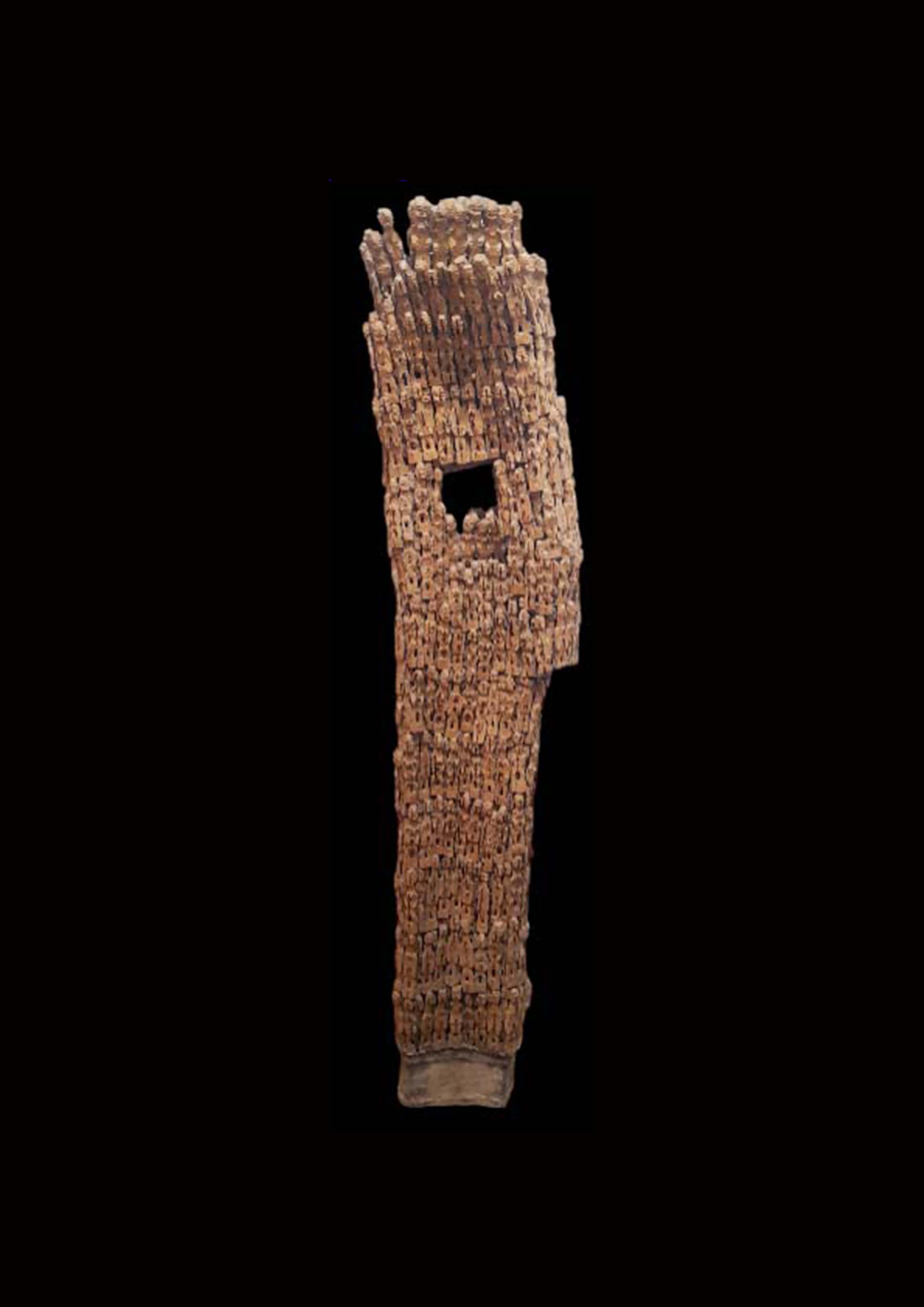
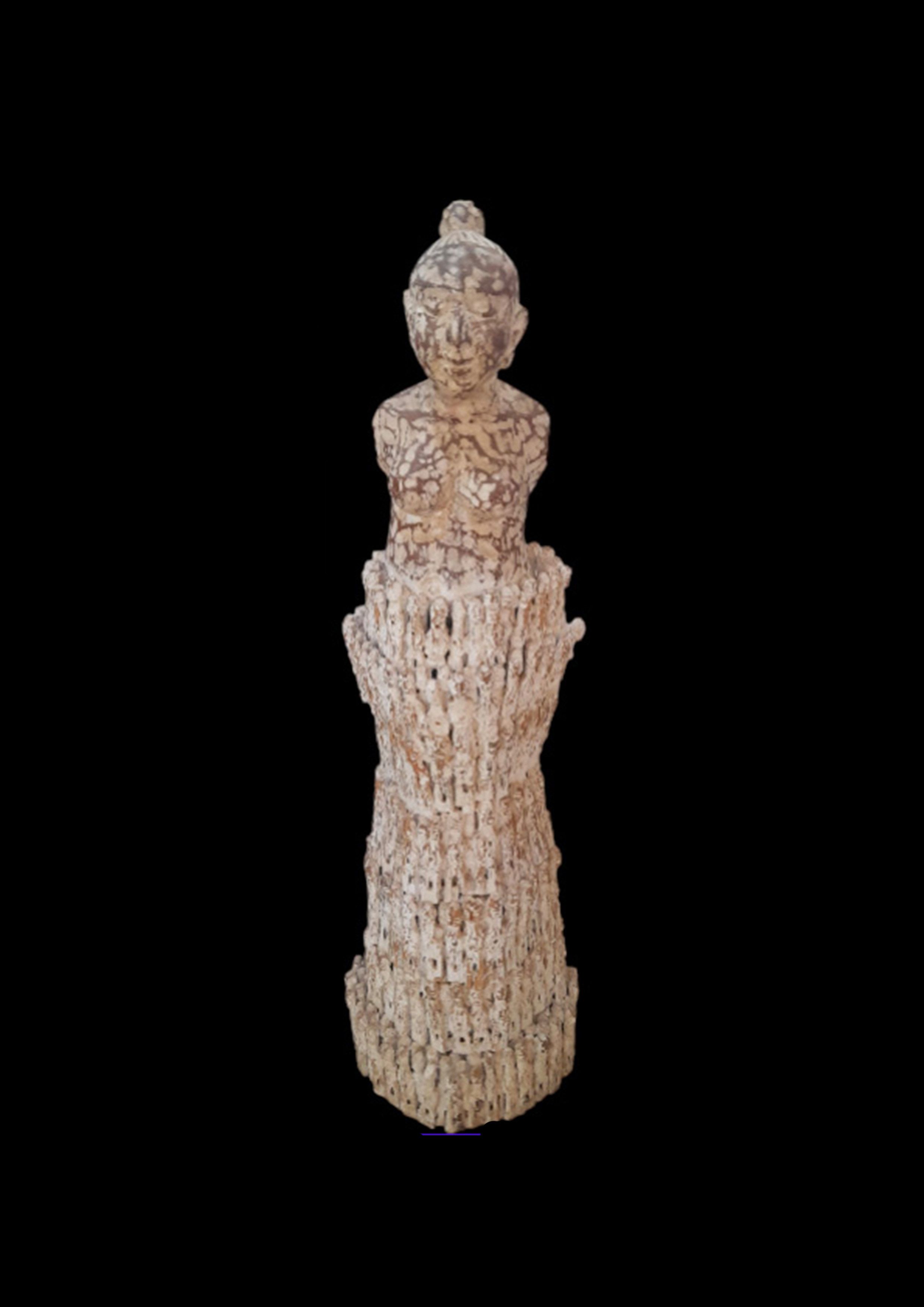
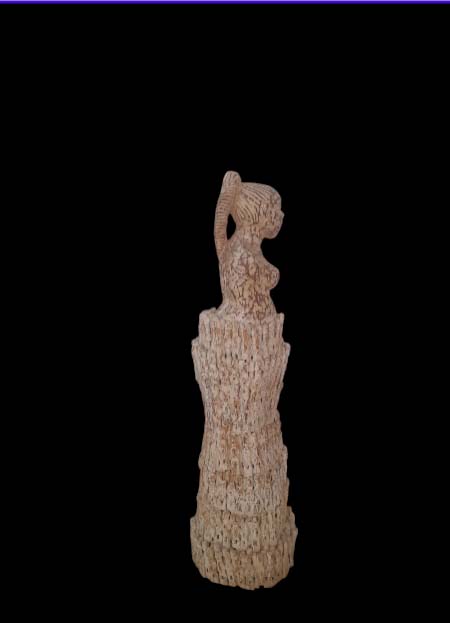
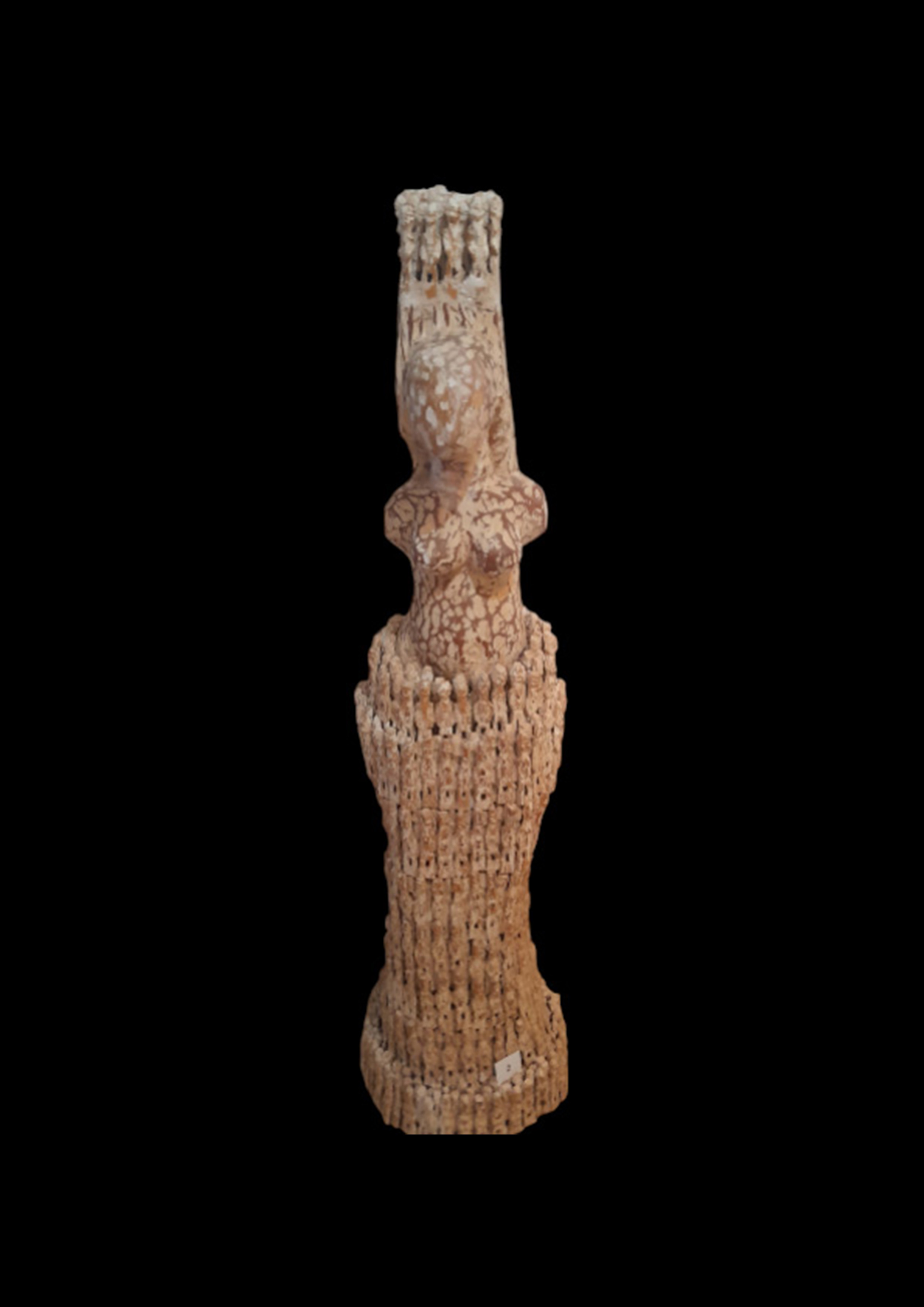
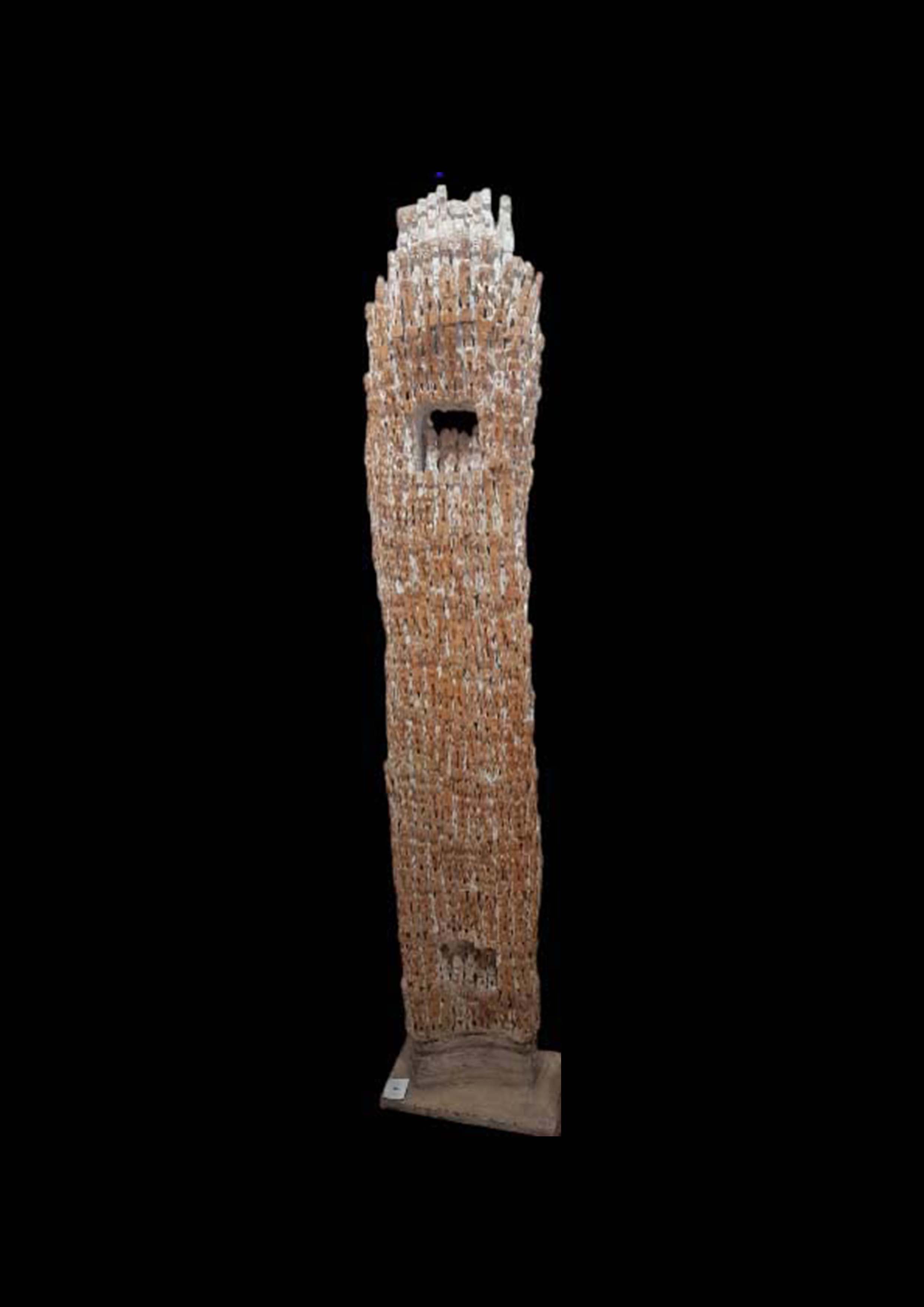
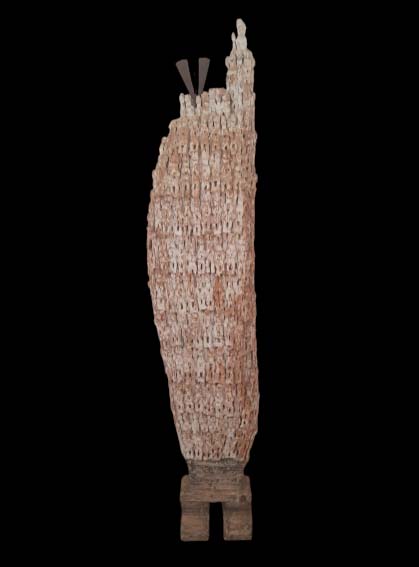
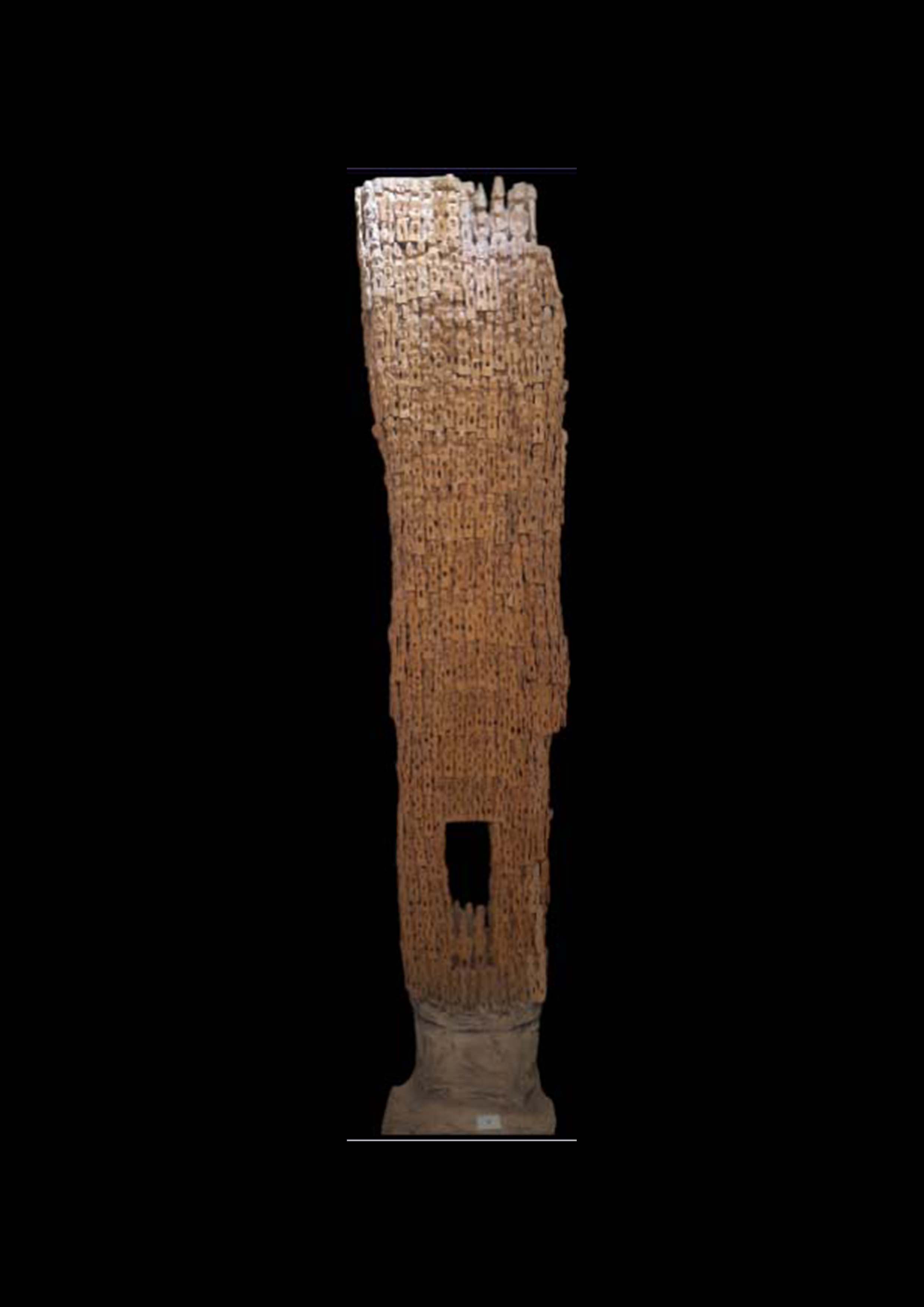
The artist highlights traditions originating in the Benin region, revisiting and interpreting them. He introduces us to them through a different aesthetic while honouring them with respect. These accumulations of slender Ibeji figures arouse our curiosity and draw our gaze.
ZINKPE’s sculptures offer a window onto traditions that remain alive in many households in Benin. Through his sculptures, the artist also helps to make them known throughout the world.
The IBEJI in Beninese culture.
IBEJI is the term used to designate twins in FON and YORUBA cultures. This tradition is practised in the Benin and Nigeria region, where the worship of twins is of great importance. According to an old legend, only monkeys knew the secrets of nature. To pass them on to humans, they sent identical twins, united and inseparable. Even today, it remains customary for families to keep IBEJI figures in their homes.
A balancing act
Sculpture, constantly playing with gravity, is an art poised between balance and imbalance. The twins multiply countless times until they unite and give shape to a brightly coloured sculpture. Starting from a narrow base, a kind of metal stand, these creations expand and soar to impressive heights ranging from 1.60 m to over 2 m. This ‘formless’ shape reveals itself as we approach, intrigues us and then captivates us. Its serrated structure reveals the meticulousness of the artist’s work.
ZINKPE
Drawings on paper, mixed media, 2022 DIM 80 X 60
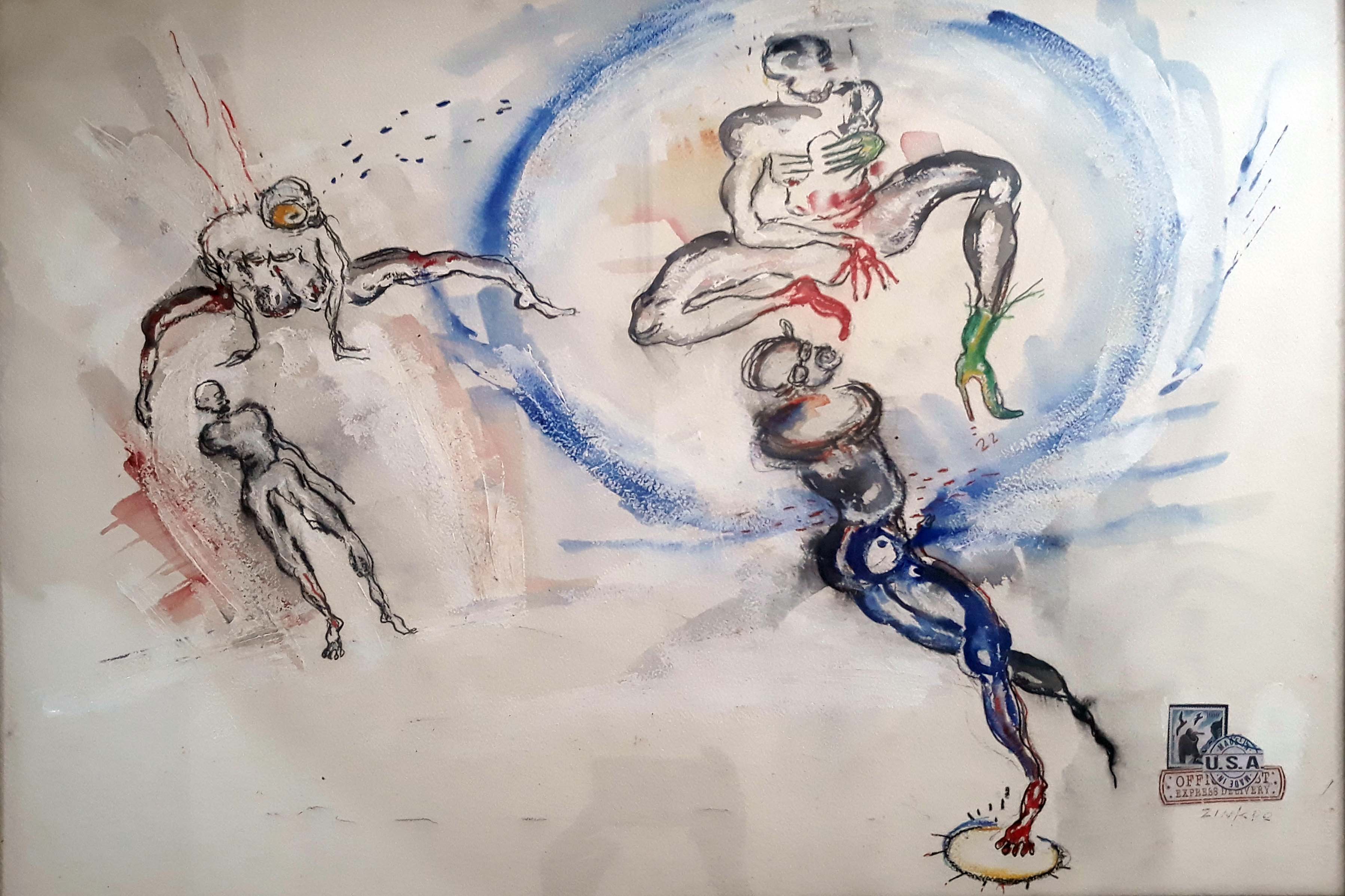
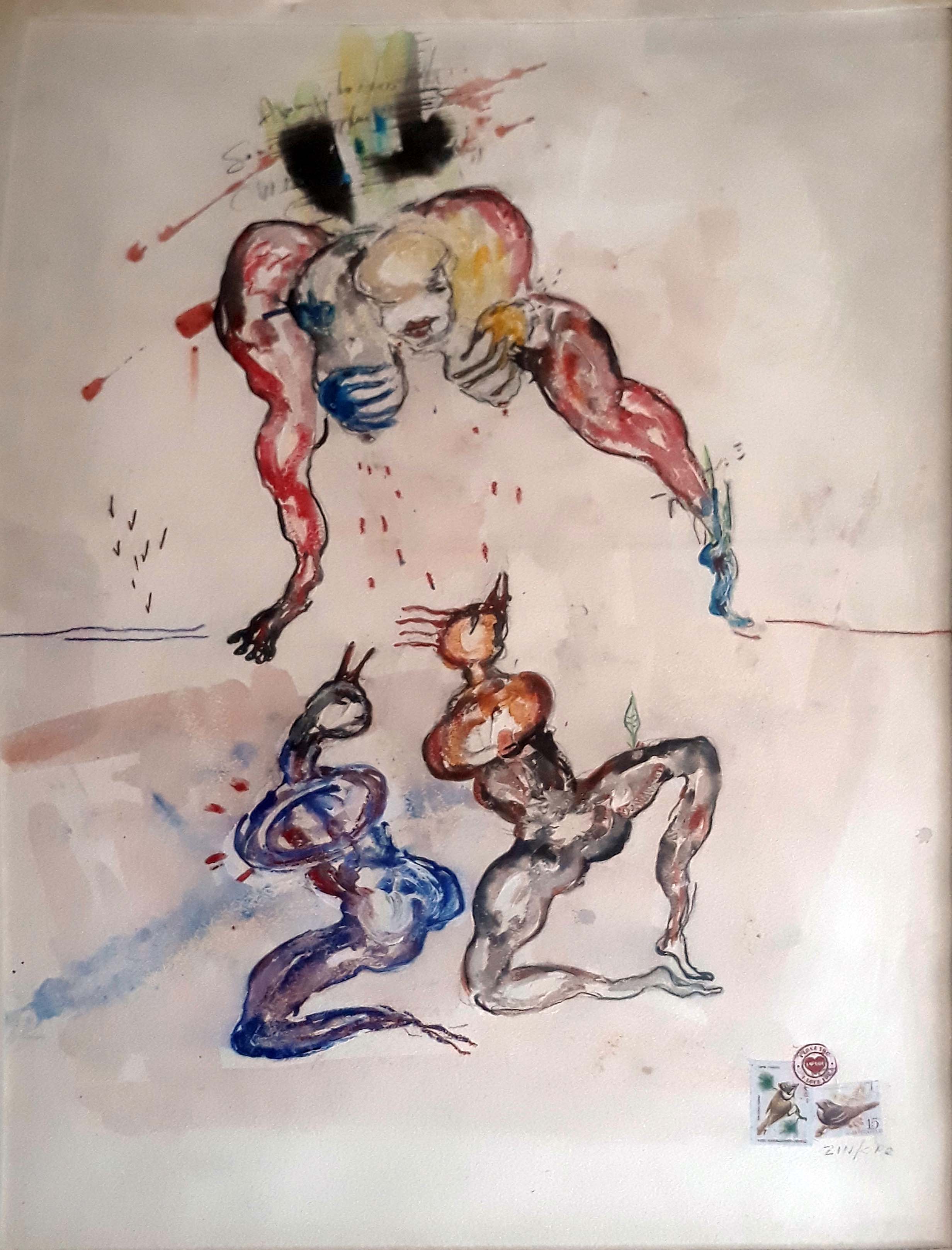
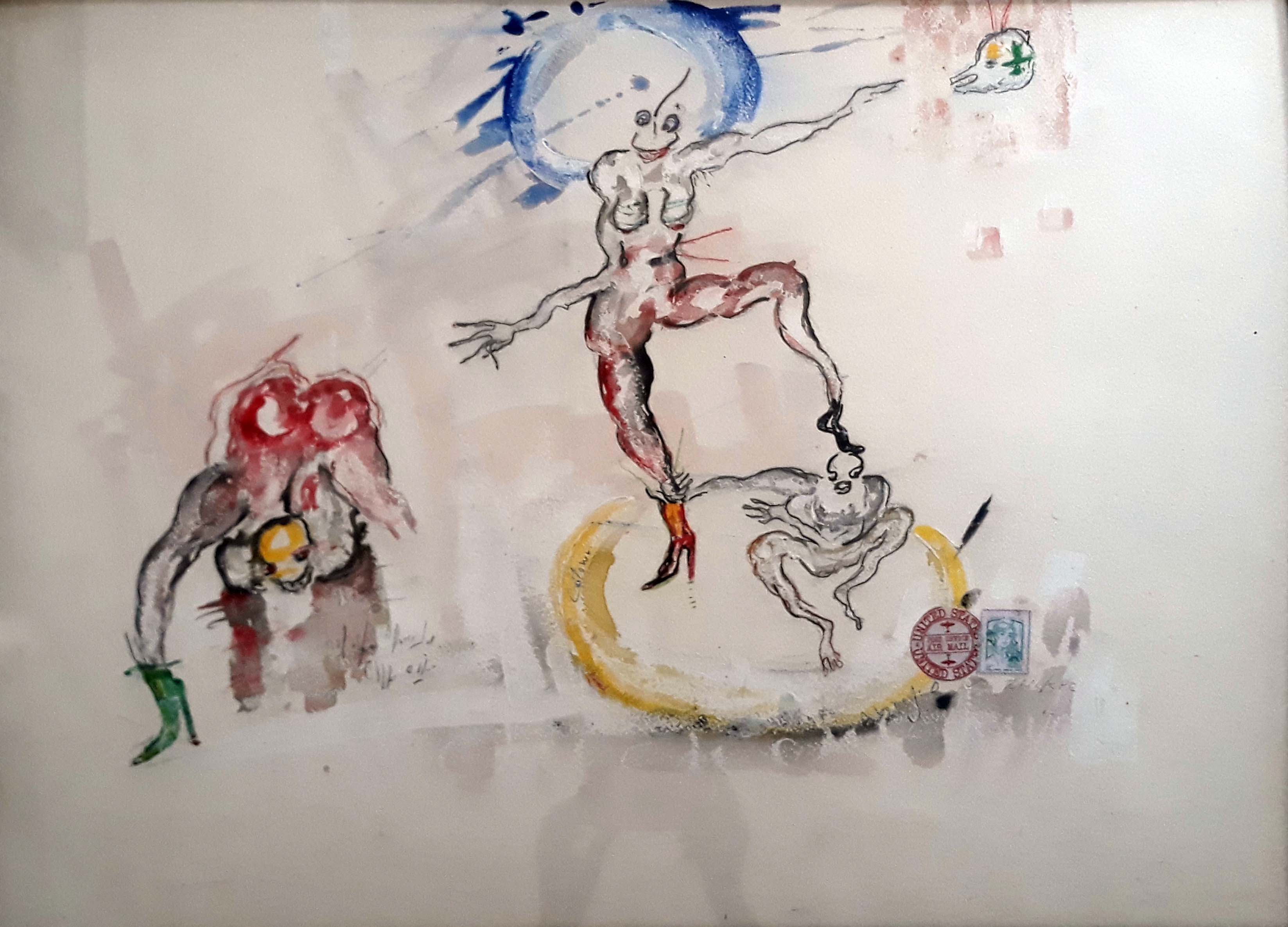
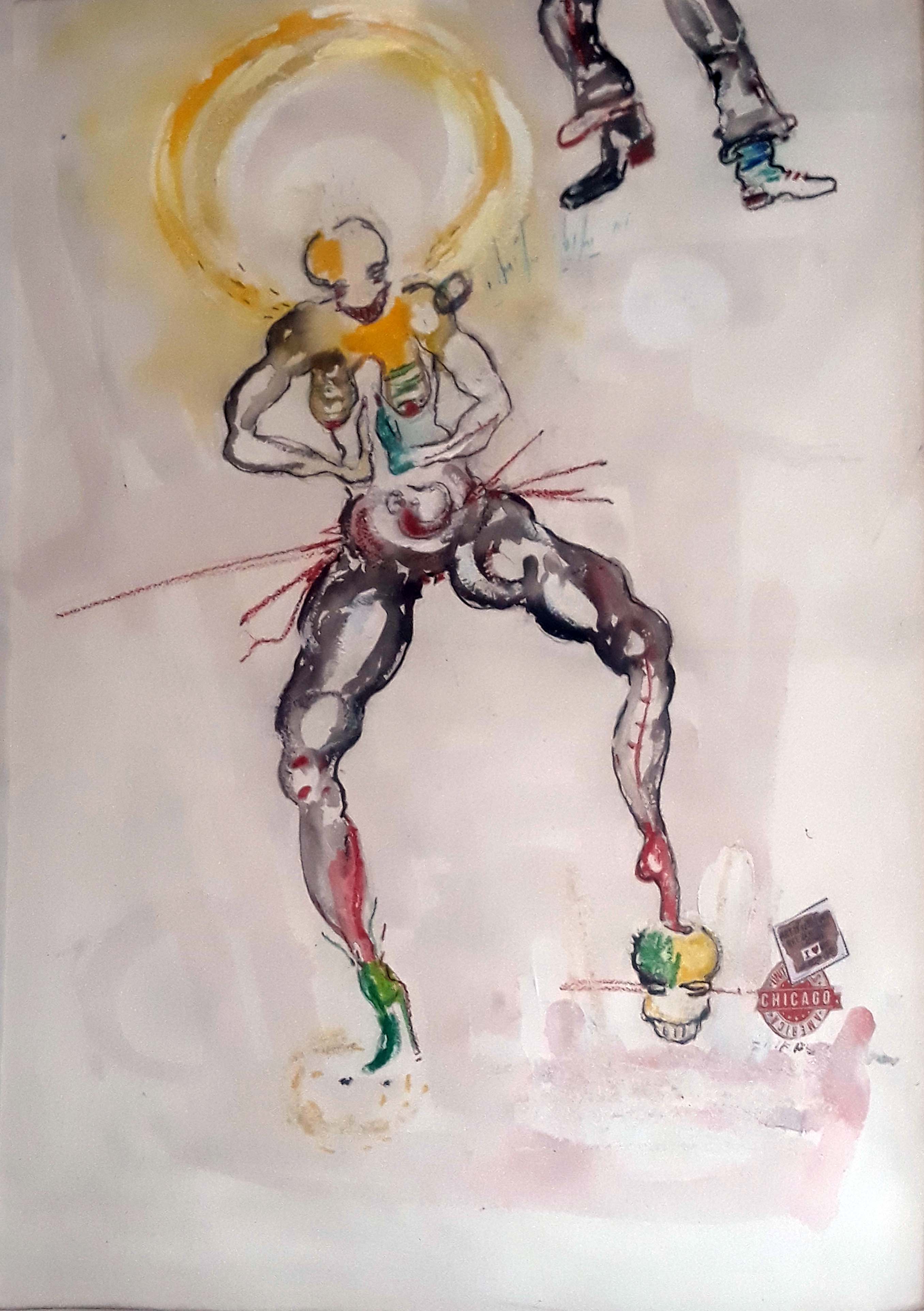
Dominique Zinkpè, born in 1969 in Cotonou, Benin, is a contemporary Beninese visual artist who creates paintings, sculptures and installations. Sometimes nicknamed the ‘African Basquiat’, he draws inspiration both from his country’s culture, including Vodun ceremonies, and from everyday African life, particularly the bush taxis that contributed to his renown in the early 2000s. He lives and works in Cotonou.
His sculptures are made from assemblages of traditional Yoruba Ibeji dolls used in the worship of twins.
He is an internationally recognised artist.

